Breast cancer
Breast cancer can affect anyone. Early detection and timely treatment can make a significant difference. Common signs may include a lump in the breast that does not cause pain, changes in breast shape, skin dimpling, or unusual nipple discharge. Regular screening and awareness support early detection. Dr. Satish Rao is a surgical oncologist in Mumbai who performs mastectomy, breast lump removal and breast conservation surgery.

Overview
Breast cancer is the most commonly diagnosed cancer among Indian women, according to the Indian Council of Medical Research (ICMR). It develops in the ductal or lobular tissue of the breast and varies widely in biological behaviour, from slow-growing, hormone-driven tumours to more aggressive subtypes. A breast lump that does not cause pain, blood stained nipple discharge, or skin dimpling should be assessed by a surgical oncologist. Treatment is planned according to tumour biology, stage, and the patient’s overall health.
What Is Breast Cancer?
Breast cancer begins when cells in the breast tissue grow abnormally and form a tumour. Most breast cancers originate in the milk ducts (ductal carcinoma) or the milk-producing lobules (lobular carcinoma).
The three broad biological subtypes are hormone receptor-positive, HER2-positive, and triple-negative breast cancer. Each responds to different treatments, which is why subtyping at diagnosis shapes the treatment plan. Any new or changing breast symptom should be evaluated by a doctor instead of waiting and watching.
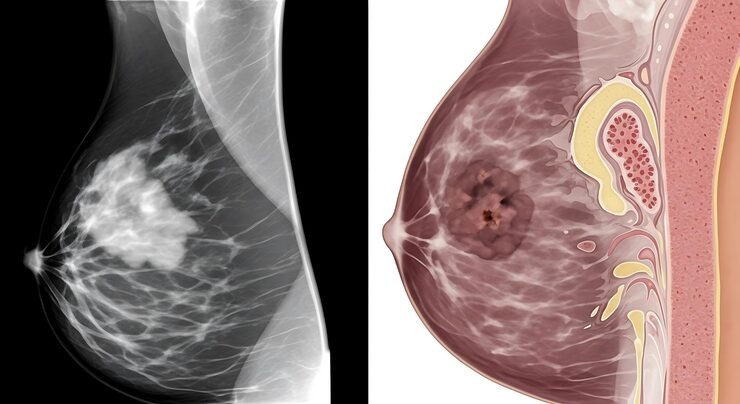

What Are the Symptoms of Breast Cancer?
A new breast lump is the most recognised warning sign, but breast cancer can present in several other ways. Awareness of the full range of symptoms supports early detection.
Symptoms to watch for include:
- 1. A lump in the breast or underarm that does not cause pain
- 2. Blood stained nipple discharge
- 3. Skin dimpling, puckering, or a texture resembling orange peel
- 4. Nipple inversion, discharge, or crusting (especially if it affects only one side)
- 5. Redness, warmth, or swelling of the breast skin
- 6. A change in breast size, shape, or contour
Not every lump is cancer, but every new lump deserves assessment. Self examination and annual clinical breast examination are practical first steps.
How Is Breast Cancer Diagnosed?
Diagnosis combines clinical assessment with imaging and tissue confirmation. No single test is sufficient on its own.
Clinical Breast Examination:
The specialist assesses the breast and regional lymph nodes (underarm, collarbone) for lumps, asymmetry, or skin changes.
Mammography
The standard imaging tool for breast cancer screening and initial evaluation. It can detect lesions that may be too small to feel.
Ultrasound:
Complements mammography, particularly in younger women with denser breast tissue, and helps distinguish solid from fluid-filled masses.
MRI
Used for pre-operative planning, or when mammography and ultrasound findings are inconclusive.
Core Needle Biopsy
A small tissue sample is taken from the suspicious area and examined under the microscope to confirm whether cancer is present.
Staging:
The AJCC TNM classification, T (tumour size), N (nodal involvement), M (distant metastasis), stages the cancer from Stage 0 to Stage IV and guides the treatment plan.
What Are the Causes and Risk Factors of Breast Cancer?
Breast cancer results from a combination of hormonal, genetic, lifestyle, and environmental influences. No single factor acts alone.
Hormonal and Reproductive Factors
Prolonged oestrogen exposure is a well-established risk factor. This includes early onset of menstruation, late menopause, having a first pregnancy after age 30, or never having been pregnant. Long-term use of hormone replacement therapy (HRT) also modestly raises risk.
Genetic Mutations
Inherited mutations in the BRCA1 and BRCA2 genes increase lifetime breast cancer risk. Genetic testing may be advised when there is a strong family history.
Family History
Having a first-degree relative (mother, sister, or daughter) with breast cancer increases a woman’s risk. Risk rises further when multiple relatives are affected or when the diagnosis occurred before age 50.
Lifestyle Factors
Alcohol consumption, obesity, physical inactivity, and smoking are recognised modifiable risk factors for breast cancer.
Frequently Asked Questions
Is breast cancer hereditary?
Having a BRCA1 or BRCA2 gene mutation increases risk, as does a strong family history. Genetic counselling and testing may be advised when multiple close relatives have been diagnosed, particularly before age 50.
Can breast cancer occur in men?
Yes, although it is rare. The presentation and treatment approach are broadly similar to women.
What is the difference between a lumpectomy and a mastectomy?
A lumpectomy removes only the tumour and a surrounding margin of tissue, preserving the breast. A mastectomy removes the entire breast. The choice depends on tumour size, location, genetics, and patient preference.
How long does breast cancer treatment take?
This varies by treatment plan. Surgery may be followed by radiation therapy, chemotherapy or hormonal therapy depending on tumour type and stage, and the duration of each differs between patients.
Risks and Limitations of Breast Cancer Surgery
Breast cancer surgery, like any surgical procedure, carries risks. These may include bleeding, infection, delayed wound healing, pain, scarring, and a collection of fluid under the skin (seroma). Changes in breast shape, size or sensation can occur after surgery. When lymph nodes are removed from the underarm, some patients may develop arm swelling (lymphedema), numbness or restricted shoulder movement. Anaesthesia also carries its own risks.
Surgery alone may not be enough for every patient. Radiation therapy, chemotherapy or hormonal therapy may also be needed depending on tumour type and stage. Results differ between patients, and the outcome of any treatment cannot be predicted with certainty. The choice between breast conservation and mastectomy depends on tumour size, location, genetics and patient preference. The risks, benefits and alternatives of each option should be discussed with the treating doctor before a decision is made.
What Factors Affect Prognosis?
Prognosis depends on tumour subtype, stage at diagnosis, receptor status, response to treatment, and the treatment plan followed. Triple-negative breast cancer tends to be more aggressive. Hormone receptor-positive cancers are often treated with long-term hormonal therapy.
Why Choose Dr. Satish Rao for Breast Cancer Treatment?
Dr. Satish Rao is recognised as one of the best breast cancer specialists in Mumbai, with extensive expertise in diagnosing and treating complex breast cancer cases. He is associated with leading hospitals in Mumbai and provides comprehensive care, including surgery, chemotherapy coordination, radiation therapy guidance, and long-term follow-up support. Patients value his compassionate approach, transparent communication, and commitment to creating personalised treatment plans tailored to each patient’s unique condition and recovery goals.
Consultation and Contact Details
To schedule a consultation with Dr. Satish Rao, contact the clinic by phone, email or WhatsApp. For the first consultation, please bring any prior reports, scans, prescriptions and a list of current medications.