Laser for Oral Cancer
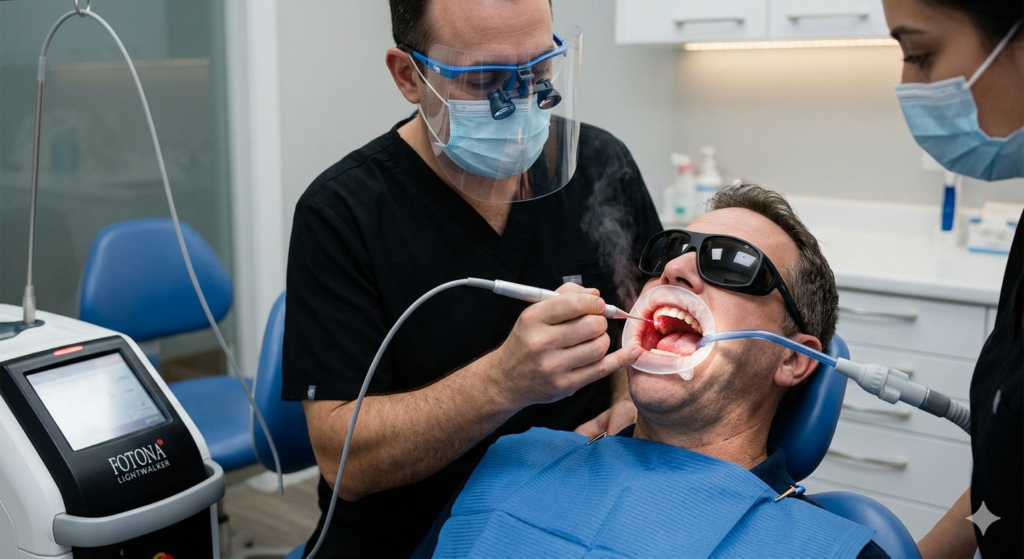
Laser treatment for oral cancers is a minimally invasive surgical approach that uses focused high-energy light beams to precisely remove cancerous and precancerous tissue from the mouth.
Overview
Laser treatment for oral cancers is a minimally invasive surgical approach that uses focused high-energy light beams to precisely remove cancerous and precancerous tissue from the mouth. It is used to treat early-stage lesions of the tongue, cheek lining, floor of mouth, lips, and gums, with significantly less bleeding, faster healing, and better functional preservation than conventional open surgery. Laser surgery is also used to treat precancerous conditions such as leukoplakia and erythroplakia before they progress to invasive cancer. Early intervention with laser treatment can significantly improve outcomes, preserve speech and swallowing, and enhance quality of life.
What Is Laser Treatment for Oral Cancers?
Laser treatment for oral cancers uses a highly focused beam of light, most commonly the CO2 (carbon dioxide) laser to vaporise, cut, or coagulate abnormal tissue with sub- millimetre precision. Unlike a conventional scalpel, the laser seals blood vessels as it cuts, reducing intraoperative bleeding and the risk of tumour cell seeding into the wound. It can be delivered through the mouth without external incisions, making it particularly suited to accessible oral cavity lesions. Laser surgery is most effective for early-stage (T1 and T2) oral cancers and for precancerous lesions requiring excision before malignant transformation occurs.
What Are the Symptoms That Indicate the Need for Laser Treatment in Oral Lesions?
Laser treatment is considered when suspicious oral lesions are identified, either as precancerous conditions or early-stage cancers. Recognising these signs early enables timely intervention before disease advances.
Symptoms and indications include:
- 1. A persistent white patch (leukoplakia) or red patch (erythroplakia) inside the mouth that does not resolve within two to three weeks
- 2. A non-healing ulcer or sore on the tongue, cheek lining, lips, or floor of mouth
- 3. A small, localised lump or thickening on the oral mucosa
- 4. Early Oral submucous fibrosis
- 5. Mild discomfort or burning sensation on the tongue or cheek lining, particularly while eating
- 6. Biopsy-confirmed early-stage oral cancer (T1 or T2) with accessible tumour location
What Are the Causes and Risk Factors for Oral Lesions Requiring Laser Treatment?
Understanding the risk factors that lead to precancerous and early cancerous oral lesions helps direct both prevention and timely detection:
Tobacco and Betel Nut Use
Smokeless tobacco, gutkha, khaini, and areca nut are the dominant causes of leukoplakia, oral submucous fibrosis, and early oral cancers in India, making them the most important modifiable risk factors.
Alcohol consumption
Heavy alcohol use damages the oral mucosal lining and acts synergistically with tobacco, significantly amplifying carcinogenic risk.
HPV infection
Human Papillomavirus (HPV-16 and HPV-18) contributes to oral mucosal dysplasia and certain early oral cancers, particularly in younger patients without a tobacco history.
Poor Oral Hygiene and Chronic Irritation
Broken teeth, ill-fitting dentures, and persistent mucosal trauma create areas of chronic low- grade injury that over time may progress to precancerous change.
How Is the Need for Laser Treatment Diagnosed?
Accurate assessment determines whether laser excision is appropriate or whether conventional surgery, radiation, or systemic therapy is required
Clinical examination
Detailed inspection and palpation of all mucosal surfaces, tongue, cheeks, floor of mouth, lips, and palate, including assessment of lesion size, borders, and texture
Biopsy
Tissue confirmation is mandatory before any treatment, an incisional biopsy determines whether the lesion is reactive, dysplastic, or invasive carcinoma
Imaging tests
Ultrasound, MRI, or CT assesses depth of invasion and lymph node status for confirmed cancers
Staging
The AJCC TNM system classifies confirmed cancers, laser surgery is appropriate primarily for T1 and T2 lesions with no nodal involvement
Frequently Asked Questions
Is laser treatment painful?
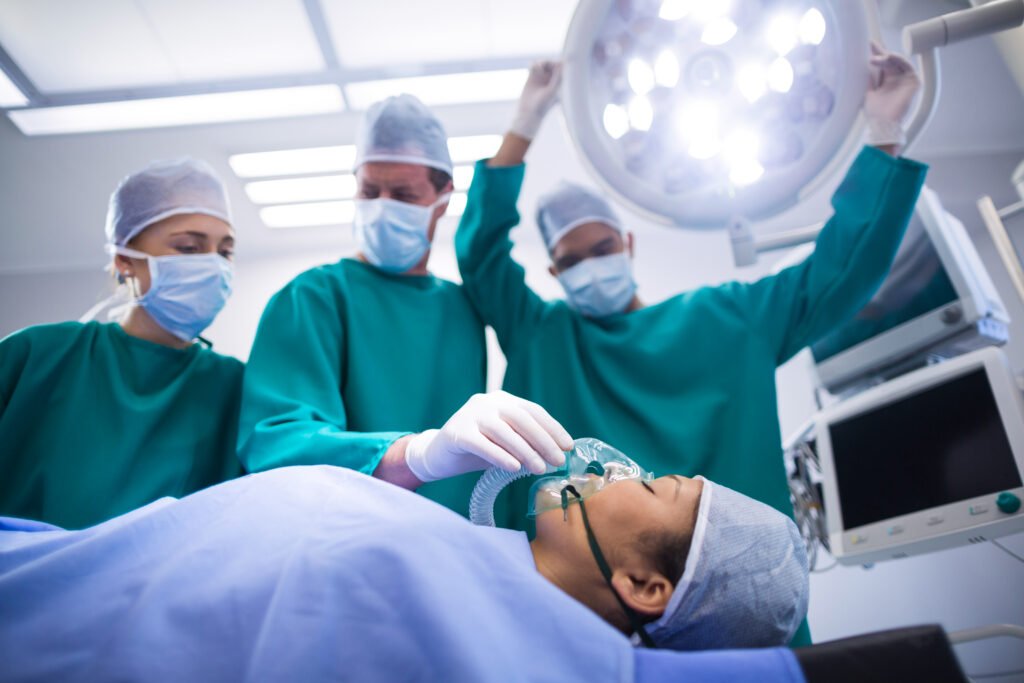
Laser excision is performed under local or general anaesthesia and is not painful during the procedure. Post-operative discomfort is mild, significantly less than conventional open surgery, and is managed with standard analgesics.
How quickly does the mouth heal after laser surgery?
Most laser wounds in the oral cavity heal within two to four weeks. Healing is generally faster and less painful than conventional incisions.
Can laser treatment cure oral cancer?
For early-stage (T1 and T2, N0) oral cancers, laser excision with clear margins is a curative treatment in the majority of cases.
Will my speech or swallowing be affected?
Laser surgery causes minimal disruption to surrounding structures, and most patients maintain near-normal speech and swallowing after early-stage oral cancer laser excision, particularly when compared with open surgery.
Can precancerous patches be treated with laser?
Yes. Laser surgery is a first-line treatment for leukoplakia, erythroplakia, and oral submucous fibrosis, removing high-risk tissue before it transforms into invasive cancer.

Outcomes and Survival Rates
Laser excision for early-stage oral cancers (T1 and T2, N0) achieves local control rates comparable to conventional surgery, with five-year survival rates of 75–85% for appropriately selected patients, according to published data in the oral oncology literature. The functional advantages are significant. Patients treated with laser surgery preserve better speech, swallowing, and mouth opening than those undergoing open resection for equivalent-sized tumours. For precancerous lesions, laser surgery eliminates the dysplastic tissue and halts progression to invasive cancer in the majority of cases, provided that tobacco and betel nut use is discontinued. Regular follow-up is essential, as new lesions can develop in the wider oral mucosa in patients who continue to use tobacco.
Why Choose Dr. Satish Rao for Oral Cancer Treatment?
- 1. Expertise in advanced oral cancer diagnosis and treatment
- 2. Personalised treatment plans focused on faster recovery
- 3 Comprehensive care with modern surgical and therapeutic techniques
- 4 Compassionate patient support for better comfort and quality of life
Together, We Can Fight Against Cancer
Start your journey towards recovery today. Contact us via phone or fill out our appointment form to schedule a consultation with Dr. Satish Rao.