Breast cancer
Breast cancer can affect anyone, but early detection and timely treatment can make a significant difference. Common signs may include a painless lump in the breast, changes in breast shape, skin dimpling, or unusual discharge. With advanced diagnosis, personalised care, and expert treatment, patients can achieve better outcomes and improved quality of life. Regular screenings and awareness are key to protecting your health.

Overview
Breast cancer is the most commonly diagnosed cancer among Indian women, according to the Indian Council of Medical Research (ICMR). It develops in the ductal or lobular tissue of the breast and varies widely in biological behaviour, from slow-growing, hormone-driven tumours to more aggressive subtypes. A painless breast lump, blood stained nipple discharge, or skin dimpling warrants immediate onco surgeon's review. When caught at an early stage, breast cancer is highly treatable, with five-year survival rates exceeding 90% for localised disease. Treatment is always personalised, shaped by tumour biology, stage, and the patient's overall health.
What Is Breast Cancer?
The three broad biological subtypes are hormone receptor-positive, HER2- positive, and triple-negative breast cancer. Each responds to different treatments, which is why accurate subtyping at diagnosis directly shapes the treatment plan. Early-stage disease is far more amenable to cure. Hence any new or changing breast symptom lasting beyond two to three weeks deserves prompt evaluation and not watchful waiting.
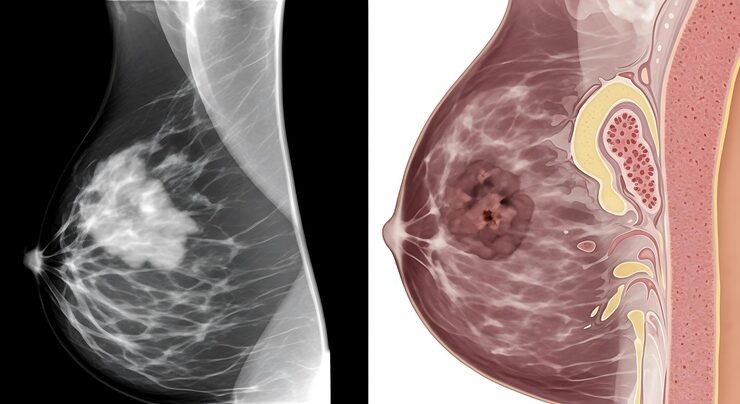
Breast cancer begins when cells in the breast tissue grow abnormally and form a tumour. Most breast cancers originate in the milk ducts (ductal carcinoma) or the milk-producing lobules (lobular carcinoma).

What Are the Symptoms of Breast Cancer?
A new breast lump is the most recognised warning sign, but breast cancer can present in several other ways, many of which are easy to dismiss. According to the World Health Organization (WHO), awareness of the full range of symptoms is one of the most effective tools for early detection.
Symptoms to watch for include:
- 1. A painless lump in the breast or underarm
- 2. A blood stained nipple discharge
- 3. Skin dimpling, puckering, or a texture resembling orange peel
- 4. Nipple inversion, discharge, or crusting (especially if it affects only one side)
- 5. Redness, warmth, or swelling of the breast skin
- 6. A change in breast size, shape, or contour
Not every lump is cancer, but every new lump deserves assessment. Self examination and annual clinical breast examination are practical, accessible first steps.
How Is Breast Cancer Diagnosed?
Diagnosis combines clinical assessment with imaging and tissue confirmation. No single test is sufficient on its own, accurate diagnosis requires all three components.
Clinical Breast Examination:
The specialist assesses the breast and regional lymph nodes (underarm, collarbone) for lumps, asymmetry, or skin changes.
Mammography
The standard imaging tool for breast cancer screening and initial evaluation; detects lesions that may be too small to feel.
Ultrasound:
Complements mammography, particularly in younger women with denser breast tissue, and helps distinguish solid from fluid-filled masses.
MRI
Used for pre-operative planning, or when mammography and ultrasound findings are inconclusive.
Core Needle Biopsy
The definitive diagnostic step, a small tissue sample is taken from the suspicious area and examined under the microscope to confirm malignancy,
Staging:
The AJCC TNM classification, T (tumour size), N (nodal involvement), M (distant metastasis), stages the cancer from Stage 0 to Stage IV and determines the full treatment plan.
What Are the Causes and Risk Factors of Breast Cancer?
Breast cancer results from a combination of hormonal, genetic, lifestyle, and environmental influences. No single factor acts alone, but some carry significantly more weight than others.
Hormonal and Reproductive Factors
Prolonged oestrogen exposure is a well-established driver. This includes early onset of menstruation, late menopause, having a first pregnancy after age 30, or never having been pregnant. Long-term use of hormone replacement therapy (HRT) also modestly raises risk.
Genetic Mutations
Inherited mutations in the BRCA1 and BRCA2 genes substantially increase lifetime breast cancer risk, in some cases to 7%-10% or higher, according to published data from the National Cancer Institute (NCI). Genetic testing is recommended when there is a strong family history.
Family History
Having a first-degree relative (mother, sister, or daughter) with breast cancer increases a woman's risk. Risk rises further when multiple relatives are affected or when the diagnosis occurred before age 50.
Lifestyle Factors
Alcohol consumption, obesity (particularly after menopause), physical inactivity, and smoking are modifiable risk factors consistently linked to elevated breast cancer incidence in large-scale studies.
Frequently Asked Questions
Is breast cancer hereditary?
Having a BRCA1 or BRCA2 gene mutation increases risk, as does a strong family history. Genetic counselling and testing are recommended when multiple close relatives have been diagnosed, particularly before age 50.
Can breast cancer occur in men?
Yes, though rarely, men account for approximately 1% of all breast cancer diagnoses. The presentation and treatment approach are broadly similar to women.
What is the difference between a lumpectomy and a mastectomy?
A lumpectomy removes only the tumour and a surrounding margin of tissue, preserving the breast. A mastectomy removes the entire breast. The choice depends on tumour size, location, genetics, and patient preference.
How long does breast cancer treatment take?
This varies by treatment plan. Surgery is followed by three to six weeks of radiation, and chemotherapy courses typically run three to six months. Hormonal therapy continues for five to ten years in eligible patients.

What Are the Outcomes and Survival Rates?
Breast cancer outcomes have improved dramatically over the past two decades. For localised breast cancer (Stage I–II), the five-year survival rate exceeds 90%. Regional spread (Stage III) carries a five-year survival of approximately 50–70%, while distant metastatic disease (Stage IV) has improved but lower survival figures.
Survival depends on tumour subtype, stage at diagnosis, receptor status, response to treatment, and the quality of multidisciplinary care. Triple-negative breast cancer tends to be more aggressive; hormone receptor-positive cancers often respond well to long-term hormonal therapy and carry a favourable prognosis.
Why Choose Dr. Satish Rao for Breast Cancer Treatment?
Dr. Satish Rao is recognised as one of the best breast cancer specialists in Mumbai, with extensive expertise in diagnosing and treating complex breast cancer cases. He is associated with leading hospitals in Mumbai and provides comprehensive care, including surgery, chemotherapy coordination, radiation therapy guidance, and long-term follow-up support. Patients value his compassionate approach, transparent communication, and commitment to creating personalised treatment plans tailored to each patient’s unique condition and recovery goals.
Together, We Can Fight Against Cancer
Start your journey towards recovery today. Contact us via phone or fill out our appointment form to schedule a consultation with Dr. Satish Rao.