Parotid Cancer Treatment
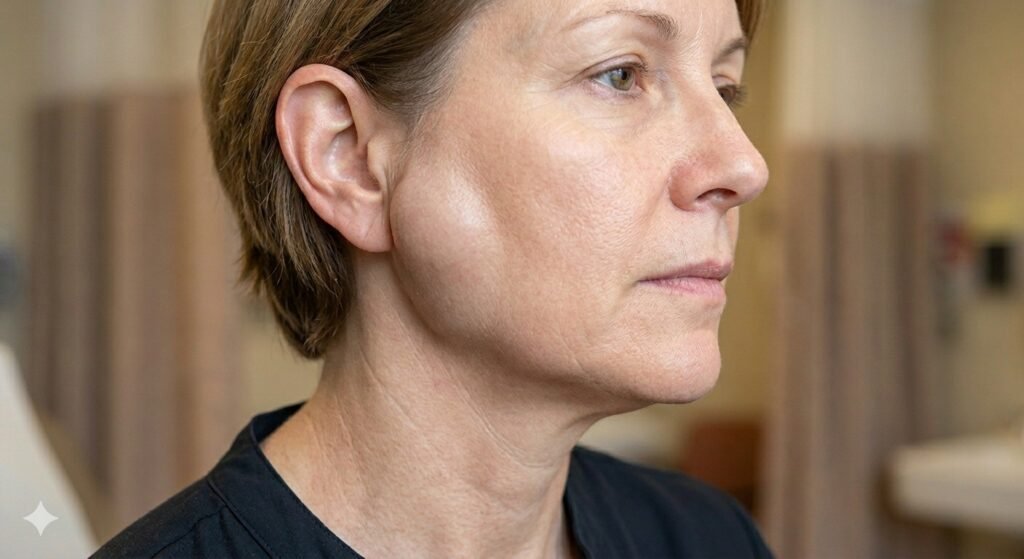
Parotid glands are located in front of each ear. Parotid glands are salivary glands.
Overview
Parotid tumours are abnormal growths that develop in the parotid glands, the largest of the salivary glands, located just in front of each ear. Most parotid tumours are benign (non- cancerous), but roughly 20% are malignant and require prompt, specialised treatment. The most common warning sign is a painless swelling near the jaw or ear. Because the parotid gland is closely entwined with the facial nerve, the nerve controlling all facial expression, expert surgical management is essential for both tumour control and preservation of facial function. When treated early, outcomes are excellent.
What Is a Parotid Tumour?
The parotid glands produce saliva that aids chewing, swallowing, and digestion. A parotid tumour forms when cells within the gland multiply abnormally. The majority, around 80%, are benign, with pleomorphic adenoma being the most common type. The remaining 20% are malignant, most frequently mucoepidermoid carcinoma or adenoid cystic carcinoma.
Please note : Even a benign parotid tumour is not simply "safe to ignore." Benign tumours can grow large, cause discomfort, and, in a small number of cases, undergo malignant transformation over time. That is why specialist evaluation is recommended for any persistent parotid swelling, regardless of whether it appears painful or not.
What Are the Symptoms of a Parotid Tumour?
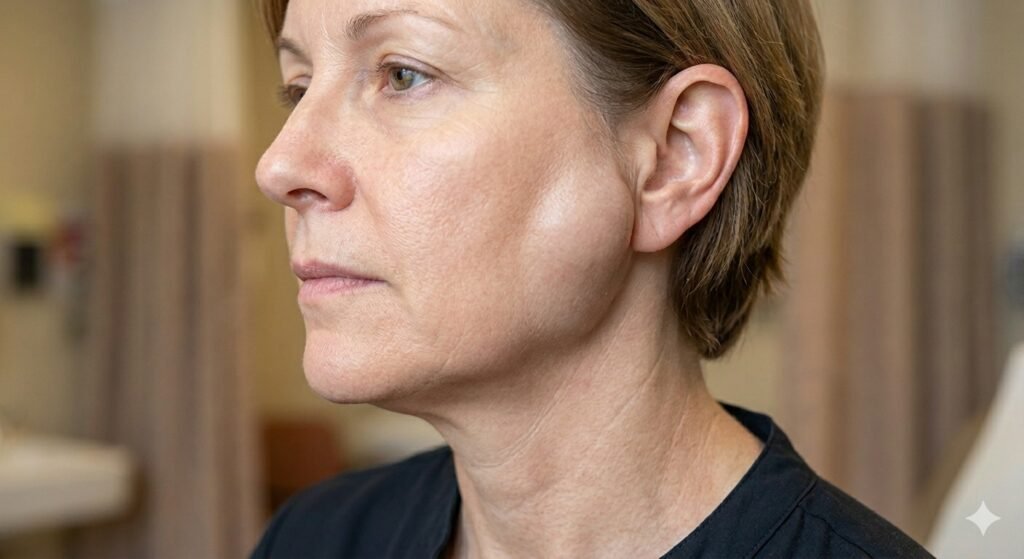
A painless lump near the ear or jaw is the hallmark presentation, present in both benign and malignant tumours. Facial weakness or asymmetry specifically suggests malignancy and demands urgent evaluation.
Symptoms to watch for include:
- 1. A painless or mildly tender lump near the ear, jaw, or upper cheek
- 2. Facial weakness, drooping, or asymmetry on one side
- 3. Numbness or a tingling sensation in the cheek, jaw, or ear
- 4. Difficulty fully opening the mouth
- 5. Pain or a feeling of pressure in the affected area
- 6. Rapid increase in size of an existing parotid swelling
What Causes Parotid Tumours and Who Is at Risk?
The precise cause of most parotid tumours is not fully established. However, several risk factors have been identified through clinical and epidemiological research:
Prior Radiation Exposure
Previous radiotherapy to the head or neck region is one of the strongest known risk factors for parotid tumour development, both benign and malignant.
Advanced Age
Parotid tumours can occur at any age but are more commonly diagnosed in adults over 50. Risk increases progressively with age.
Viral Infections
Epstein-Barr virus (EBV) and human papillomavirus (HPV) have been linked to specific malignant subtypes, particularly lymphoepithelial carcinoma.
Tobacco Use
Smoking is a documented risk factor across all head and neck malignancies, including parotid tumours.
Genetic Predisposition
A personal or family history of salivary gland or head and neck tumours increases susceptibility.
How Is a Parotid Tumour Diagnosed?
Diagnosis requires a structured combination of clinical assessment, imaging, and tissue sampling. No single test provides the complete picture.
Clinical examination
The specialist assesses lump size, firmness, mobility, skin involvement, and any facial nerve deficit.
Ultrasound
First-line imaging to characterise the mass, define its borders, and guide needle biopsy.
MRI
Preferred for evaluating soft-tissue detail, facial nerve involvement, and deep lobe extension.
CT Scan
Useful for assessing bone erosion and cervical lymph node status.
Frequently Asked Questions
Is every parotid tumour cancerous?
No, approximately 80% of parotid tumours are benign. The most common benign type is pleomorphic adenoma. However, even benign tumours require specialist evaluation and surgical removal, as they can grow significantly and a small proportion may become malignant over time.
Will surgery affect my facial movement?
In skilled hands, the facial nerve is identified and carefully preserved in nearly all cases. Temporary weakness is possible and usually resolves within weeks to months. Permanent weakness is rare and occurs mainly when the nerve is directly invaded by a malignant tumour.
How long is recovery after parotid surgery?
Most patients return to light daily activity within two to three weeks. Full recovery, including resolution of swelling and any facial nerve rehabilitation, typically spans two to three months.
Outcomes and Survival Rates
Benign parotid tumours have an excellent prognosis, surgical removal is typically curative, though pleomorphic adenomas carry a small risk of recurrence if incompletely excised. For malignant parotid tumours, early-stage disease carries a five-year survival rate of approximately 90% for localised cases. Advanced-stage and high-grade tumours carry lower survival figures. Facial function recovery depends on whether the facial nerve was preserved.
Survival in malignant cases is influenced by tumour grade, histological subtype, stage, nodal status, and completeness of surgical resection.
Why Choose Dr. Satish Rao?
- 1. Expertise in advanced oral cancer diagnosis and treatment
- 2. Personalised treatment plans focused on faster recovery
- 3 Comprehensive care with modern surgical and therapeutic techniques
- 4 Compassionate patient support for better comfort and quality of life
Together, We Can Fight Against Cancer
Start your journey towards recovery today. Contact us via phone or fill out our appointment form to schedule a consultation with Dr. Satish Rao.