Neck Nodes Evaluation & Treatment
Neck nodes, the lymph nodes of the cervical region, play a central role in the body’s immune defence.

Overview
When neck nodes enlarge persistently, they can be a sign of infection, an inflammatory condition or malignancy. A neck lump that lasts beyond two to three weeks, grows in size, or feels hard and painless should be evaluated by a specialist. Neck node involvement in head and neck cancers influences staging and treatment. The diagnosis helps decide whether management involves observation, biopsy, neck dissection, radiation or systemic therapy.
What Are Neck Nodes?
The lymph nodes of the neck are organised into five anatomical levels on each side. These nodes filter lymphatic fluid from the scalp, face, oral cavity, throat, thyroid and salivary glands. Head and neck cancers can spread to these nodes. A neck node may need evaluation when it is larger than one centimetre, persists beyond three weeks, or shows features such as hardness, fixity to surrounding structures or rapid growth.

What Are the Symptoms of Neck Node Disease?
Not all enlarged neck nodes are painful. A painless lump can also be a sign that needs evaluation.
Key symptoms include:
- 1. A lump or swelling in the neck lasting more than two to three weeks
- 2. A mobile, non-tender neck swelling
- 3. A hard, firm, or fixed neck node that does not move freely
- 4. Skin overlying the node becoming red, warm, or tethered
- 5. Associated mouth ulcer, throat pain, hoarseness, or difficulty swallowing
- 6. Unexplained weight loss, night sweats, or persistent fever
Any neck lump that does not resolve within three weeks should be evaluated by a specialist, whether or not it is painful.
What Are the Causes and Risk Factors?
Understanding the cause of neck node enlargement guides the choice of investigation and treatment:
Head and Neck Cancer Spread
Oral, laryngeal, thyroid, parotid and oropharyngeal cancers can involve the cervical lymph nodes.
Tuberculosis
Tuberculosis can cause chronic enlargement of the cervical lymph nodes, including people with weakened immunity
Lymphoma Risk Factors
Age, immune suppression, prior viral infections (such as Epstein-Barr virus) and family history can increase susceptibility to lymphoma involving the neck nodes.
How Are Neck Nodes Diagnosed?
Diagnosis involves a structured combination of clinical assessment, imaging and tissue confirmation:
Clinical examination
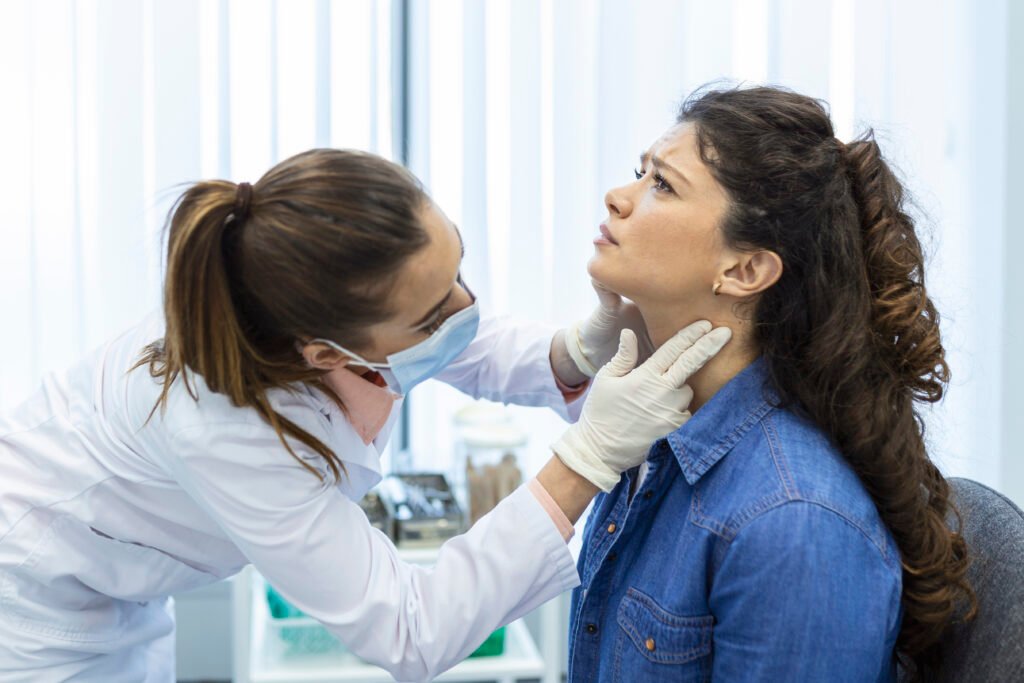
Assessment of node size, consistency, mobility, tenderness and associated head and neck findings, including the oral cavity, throat and skin.
Ultrasound
First-line imaging that shows node features, guides FNAC and can detect nodes that cannot be felt.
FNAC (Fine Needle Aspiration Cytology):
A needle sampling of the node that helps identify malignant cells, reactive changes or granulomas (TB) without open surgery.
CT and MRI:
CT maps nodal levels and shows bone erosion. MRI shows soft tissue involvement and perineural spread.
Factors That Guide Treatment
The treatment plan depends on the underlying cause of the neck node enlargement, such as infection, inflammation or a cancer-related condition. Where cancer is involved, the stage of the disease is also considered.
Evaluation and Treatment Planning by Dr. Satish Rao
Dr. Satish Rao evaluates swollen or abnormal neck lymph nodes using clinical examination, imaging and biopsy techniques to identify the cause of the enlargement. Treatment options are planned according to whether the cause is infection, inflammation or a cancer-related condition. Consultations include clear communication about findings and follow-up.

Outcomes and Survival Rates
Evaluation and treatment of neck nodes depend on the underlying cause, and individual experiences vary.
- FNAC and imaging may not always give a definite diagnosis, and further tests or a surgical biopsy may be needed.
- Neck dissection is a major surgery. General risks of surgery include bleeding, infection, fluid collection under the skin and scarring.
- Neck dissection can cause numbness around the neck and ear and weakness of shoulder movement, depending on the extent of surgery and the nerves involved.
- Radiation and systemic therapy can cause side effects, which depend on the type and dose of treatment.
- Treatment choices are made after evaluation of the individual patient, including the cause and stage of the disease.
Frequently Asked Questions
Is every neck lump a sign of cancer?
No. Neck lumps can also be caused by infection or inflammation. Any neck lump that lasts beyond three weeks, particularly in adults over 40 with a tobacco or alcohol history, should be evaluated by a specialist to check for malignancy.
What is FNAC and is it painful?
Fine Needle Aspiration Cytology uses a thin needle to collect cells from the neck node, with or without local anaesthesia. The procedure is brief. The sample is examined to help identify the cause of the swelling, and it does not require open surgery.
Can neck node cancer be cured?
Management depends on the underlying cause and the stage of the disease. Options include observation, biopsy, neck dissection, radiation and systemic therapy.
Will neck dissection affect my shoulder movement?
Shoulder movement can be affected after neck dissection. The effect depends on the type of dissection and on whether the accessory nerve is preserved. Selective neck dissection preserves the accessory nerve. Shoulder weakness is more likely after radical neck dissection. Physiotherapy is routinely recommended after surgery.
How long does recovery take after neck dissection?
Wound healing typically takes two to three weeks. Recovery varies from person to person, and shoulder physiotherapy is advised after surgery as directed by the treating doctor.
Appointments and Contact Details
To schedule a consultation with Dr. Satish Rao, contact the clinic by phone, email or WhatsApp. For your first consultation, please bring any prior reports, scans and prescriptions, along with a list of your current medications.